
Biotech boosters win big in both HASC, SASC defense policy bills for FY26
Both the House and Senate Armed Services Committees voted to streamline Pentagon procurement of biologically-derived materials, from first aid treatments to novel explosives.
Both the House and Senate Armed Services Committees voted to streamline Pentagon procurement of biologically-derived materials, from first aid treatments to novel explosives.

Democrat Sen. Maria Cantwell of Washington, where Boeing is headquartered, continues to raise concerns about potential interference with civil and military aviation.


SASC’s Subcommittee on Personnel oversees both military and DoD civilian personnel policies.

Jacky Rosen is the top Democrat on the SACS’s Subcommittee on Cybersecurity, which is responsible for the policies and programs related to cyber forces and capabilities.

"We intend to get this money out the door very quickly, working with the administration," said one senior congressional official.
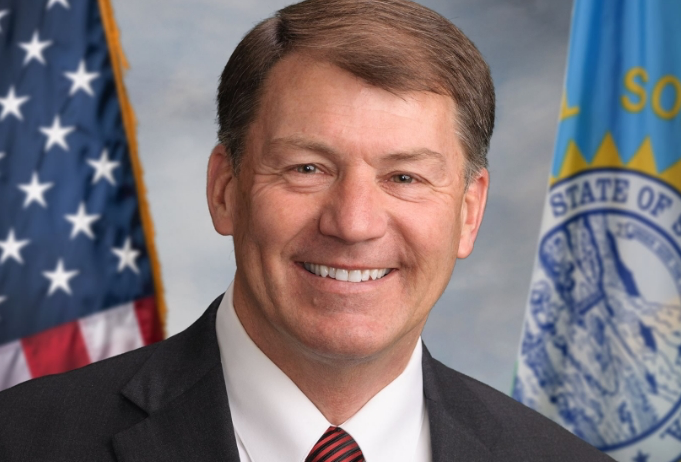
Mike Rounds chairs the SACS’s Subcommittee on Cybersecurity, which is responsible for the policies and programs related to cyber forces and capabilities.

Michigan’s defense ecosystem and expertise makes it a special asset for production.

As the 119th Congress moves forward under a Republican-led majority party, Rogers returns as Chairman of the House Armed Services Committee, with oversight of the panel that drafts the annual National Defense Authorization Act (NDAA) authorization bill.

Hegseth’s nomination is set to come to the Senate floor later this week, where it is expected to pass along party lines.

In this op-ed, John Ferrari of AEI lays out the first three areas of focus he hopes the new Navy secretary will tackle right away.

New Army policy on “enabling modern software development” actually doubles down on some of DoD’s worst dysfunctions, argues Warren Katz, chairman of the Alliance for Commercial Technology in Government, violating the spirit – and perhaps the letter – of the law.


Consolidate network monitoring, performance management, and fault isolation into a single, comprehensive solution.

Perhaps most intriguing is legislative language that calls into question Pentagon and IC plans to declassify data from classified remote sensing satellites that are part of a newly developed joint architecture called the "High-Capacity, Find, Fix, Track, Target and Engage and Assess Constellation," or "HCF" for short.

The language in the SASC version of FY25 NDAA demands that DoD detail what military systems have previously and currently have operated in, or in those adjacent to, "the 1525-1559 megahertz and the 1626.5-1660.5 megahertz" radio frequency bands at the center of the long-running DoD-Ligado dispute.

The amendment to break congressionally-mandated spending caps, offered by Sen. Roger Wicker, the committee's top Republican, led SASC Chairman Jack Reed to vote against the bill.

Despite Air Force Secretary Frank Kendall's reassurances, the governors are outraged at what they see as a Defense Department end-run around their authorities that they say could set a negative precedent.